


Lumbar Disc Herniation
Lumbar Disc Herniation – Explained Simply
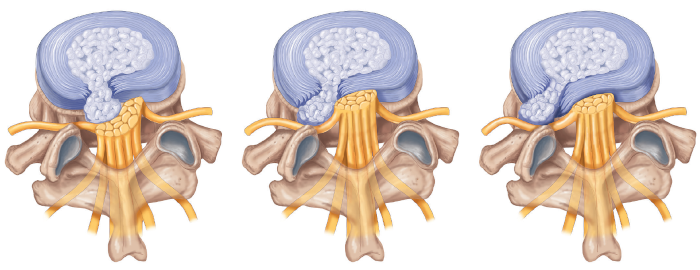
Your spine is made up of bones (vertebrae) with soft cushions (discs) between them. These discs act like shock absorbers. Sometimes, one of these discs in the lower back (lumbar area) can slip or bulge out—this is called a lumbar disc herniation.
What Happens: When a disc herniates, it can press on nearby nerves. This often causes:
- Lower back pain
- Pain that shoots down the leg (sciatica)
- Numbness or tingling
- Muscle weakness
It’s like a jelly donut—if the jelly leaks out, it can irritate the nerves nearby.
Treatment Options:
Most people get better without surgery. Here’s how:
- Rest & Activity Modification
Avoid heavy lifting or bending. Gentle movement helps healing. - Medications
Painkillers, anti-inflammatory drugs, or muscle relaxants can ease discomfort. - Physical Therapy
Exercises to strengthen your back and improve flexibility. - Hot/Cold Packs
These can reduce pain and swelling. - Epidural Injections
In some cases, doctors inject medicine near the nerve to reduce inflammation. - Surgery (if needed)
If pain doesn’t improve or there’s serious nerve damage, surgery may be done to remove the bulging part of the disc.
Good News:
Most people recover with simple care and time. Staying active (but gentle) and following your doctor’s advice can make a big difference.